Kimchi Jjigae Recipe
40 minBase: 2 servings
Ingredients
Main ingredients
- Well-fermented napa cabbage kimchi300 g
- Pork shoulder150 g
- Medium-firm tofu150 g
- Onion80 g
- Green onion20 g
Seasonings
- Minced garlic2 tsp
- Gochugaru1 tsp
- Soy sauce1 tsp
- Sugar0.5 tsp
- Neutral cooking oil1 tsp
- Water500 ml
Ingredient preparation notes
- Well-fermented napa cabbage kimchi
Weigh with a little clinging brine. Check for fish sauce and salted shrimp.
- Pork shoulder
Slice about 5 mm thick.
- Soy sauce
Add gradually at the end if your kimchi is salty.
Equipment & measures
- Knife and cutting board
- Kitchen scale and measuring spoons
- Heavy saucepan and lid
- Ladle and cooking spoon
- Food thermometer
1 tsp = 5ml · 1 tbsp = 15ml. Use measuring spoons.
Prep 10 min · Cook 30 min
Method
The instructions below are for 2 servings.
Cut the ingredients
Cut kimchi into 3 cm pieces and pork into bite-sized slices about 5 mm thick. Slice the onion, cut tofu 1 cm thick, and slice the green onion diagonally. Clean utensils and boards after handling raw pork.
Start the pork
Warm a heavy saucepan over medium heat and add the oil. Spread out the pork and cook for about 3 minutes to change its exterior color. Surface browning alone does not establish that the meat is safely cooked.
Cook the kimchi and aromatics
Add kimchi, onion, and garlic. Stir over medium heat for 3 minutes. If the bottom starts to catch, use 30 ml from the measured water to loosen it.
Simmer the broth
Add the remaining water, gochugaru, and sugar. Bring to a boil, lower to a gentle simmer, and cook with the lid slightly open for 15 minutes. Stir once or twice as the kimchi softens.
Add tofu and check the pork
Lay in the tofu and simmer for 5 minutes. Check the thickest pork piece with a thermometer for at least 63°C/145°F, and continue simmering for at least 3 minutes after that temperature is reached.
Finish and adjust
Add green onion and simmer for 1 minute. Taste, then add the measured soy sauce gradually as needed. If too salty or concentrated, add water in 30 ml increments and bring the stew back to a simmer.
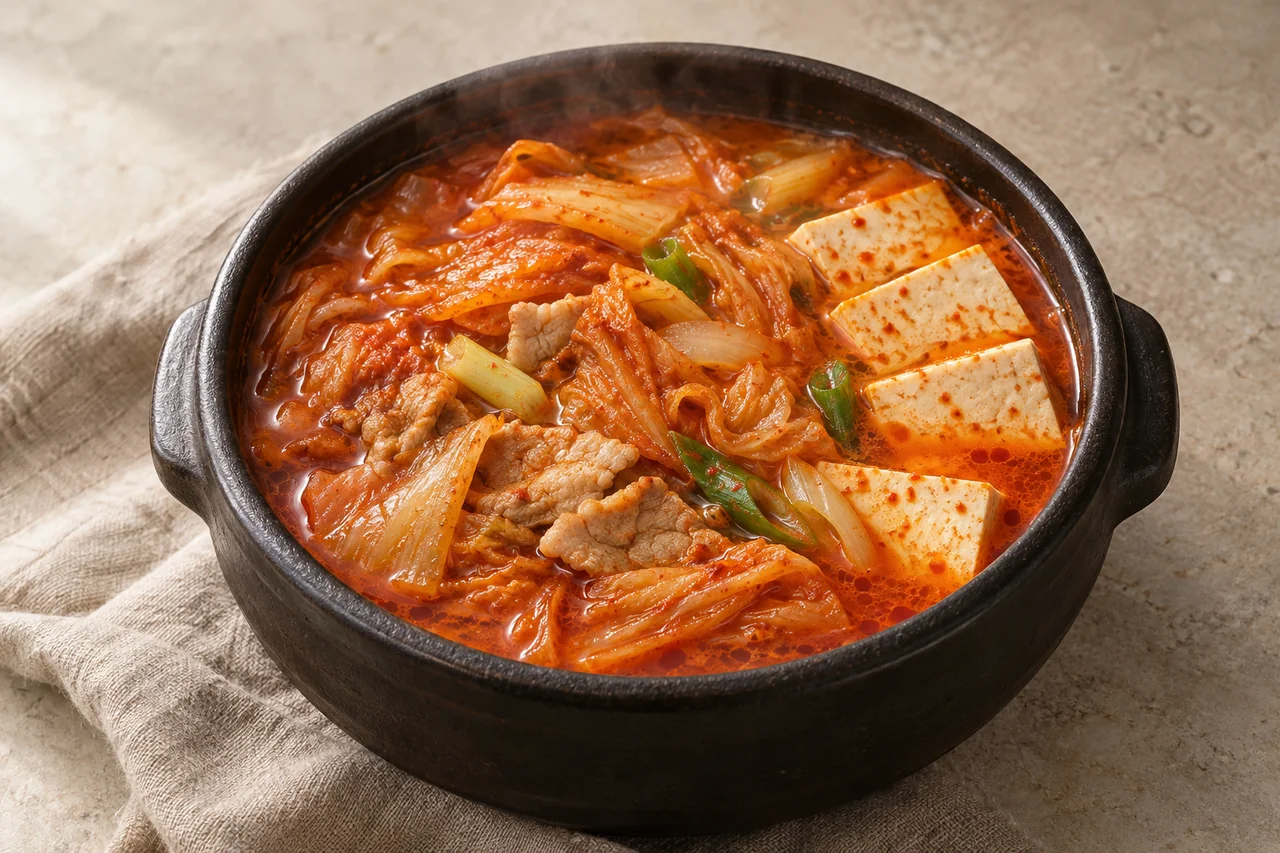
Make a two-serving kimchi stew with fermented napa kimchi, pork, and tofu. Follow the cooking order and adjust the broth for your kimchi's sourness and saltiness.
This version starts with pork and well-fermented napa kimchi, then adds tofu near the end. Sour kimchi gives the broth its character. Since brands and batches vary in saltiness, reserve the soy sauce until you taste the simmered stew.
A LITTLE KITCHEN WISDOM
Little details that help
Choose fermented kimchi
Use kimchi with a clear, pleasant sourness rather than newly made, sweet-tasting kimchi. Cooking is not a way to rescue kimchi that shows mold or spoilage.
Separate sourness from saltiness
Sugar softens the impression of sourness but does not remove salt. Taste before adding soy sauce; dilute an overly salty broth with a little water and reassess.
Storing leftovers
Divide leftovers into shallow containers and refrigerate at 4°C/40°F or below within 2 hours, or within 1 hour above 32°C/90°F. Use within 3 days. Reheat only the portion needed to 74°C/165°F throughout.
Common questions
Can I add more sugar for very sour kimchi?
Start with the listed half teaspoon and taste after simmering. If needed, add another quarter teaspoon at a time, while also considering a little water or more tofu rather than making the stew noticeably sweet.
Why add the tofu near the end?
Repeated stirring can break it apart. Adding tofu after the kimchi softens and moving the spoon gently around it helps preserve the pieces.